

When Easter Hurts
Celebrating a holiday that no longer feels like a celebration but a reminder of evertyhing you lost

It’s the same thing every year. There’s a sanctuary full of lilies, bright pastels, maybe a cross with a purple cloth draped across it or a tomb that stands empty. Everyone is wearing their carefully selected Easter outfits full of symbols of new life, spring, hope, and joy. There’s an air of joy, celebration, and hallelujahs.
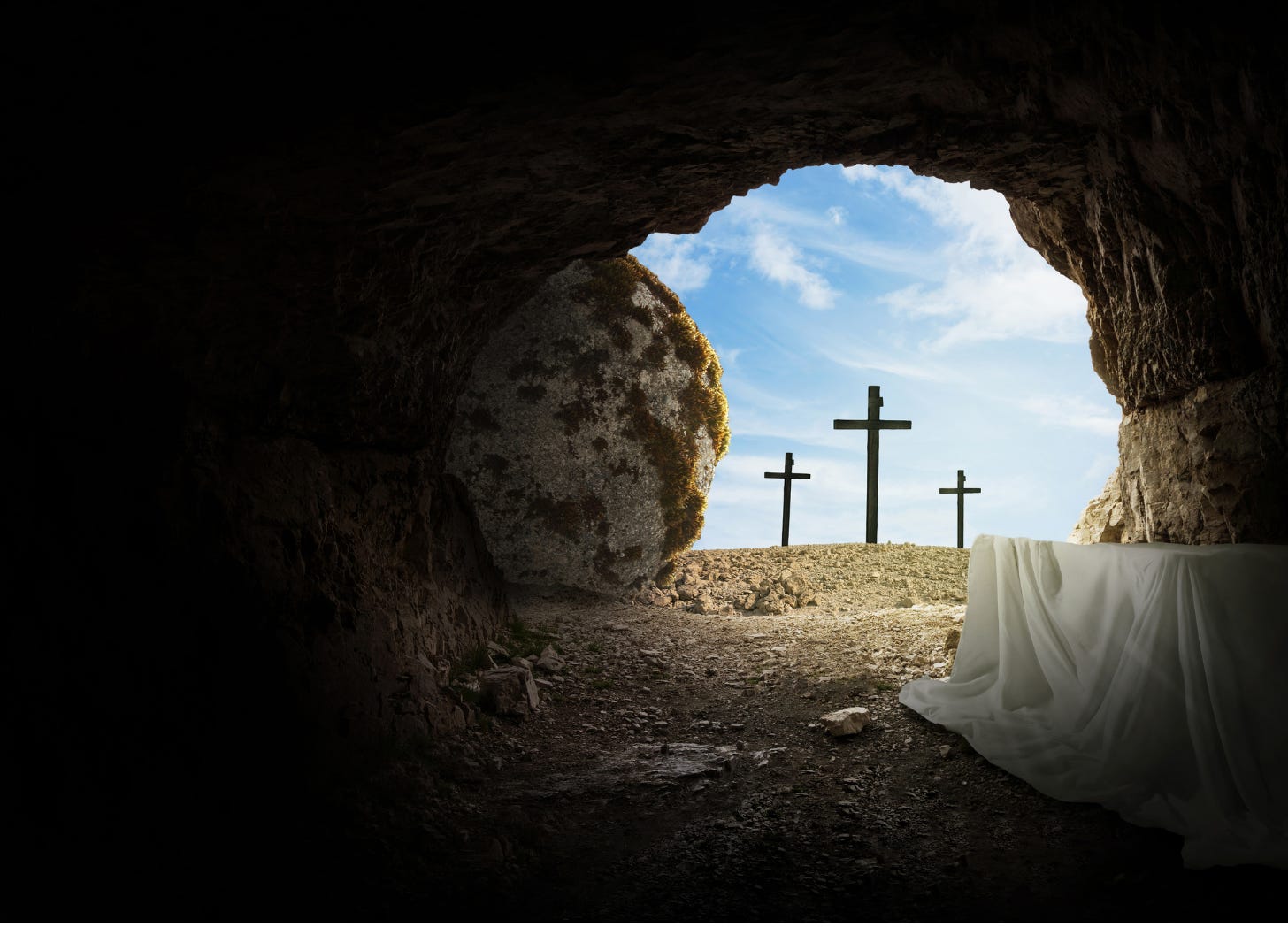
And yet, you sit in the back, probably near the exit, feeling like you’re in black and white and under water while everyone else in technicolor dancing on the surface of the ocean, and wondering, How long is this going to take and how quickly can I leave once it’s done? You know why you’re celebrating but there’s also something that feels like pain and betrayal in it all.
Because how can they be celebrating what you’re still waiting for - the reunion of the one you lost that you loved the most?
This is something I’ve struggled with for years - how God got His Son back after three days. Meanwhile, for me, it’s been 3,325 days with no end in sight since I lost my son. And how is that fair? Honestly, it makes God feel selfish.
If this is how Easter feels for you, you’re not alone. Each year, especially as I get to know God more and build my relationship with Him, I think it will get better. And each year, it’s still a feeling of wanting to get out as soon as possible and the celebration feeling a little too in your face and little too joyful.

They say death has lost its sting and grave its victory but I’m sitting there being stung by death so many times, it has become numb and a place I just avoid all together.
The odd thing is, I know, logically, that if God hadn’t gotten His son back after three days, I would have absolutely no hope of seeing mine again. In fact, I’ve preached it to myself over and over and over again.
But there still sits that little voice, that piece of me that is so deeply hurt by an apparent betrayal by God, that I can’t connect with the joyfullness of Easter any more. The part that makes me lean over to my husband and whisper something snarky in his ear when the pastor preaches the normal joyful, Gospel forward message that falls flat every year.
Yes, I know my Sunday is coming when everything will be redeemed and I will be reunited with my sons. But right now, I’m living in a perpetual Saturday. And Saturday hurts.
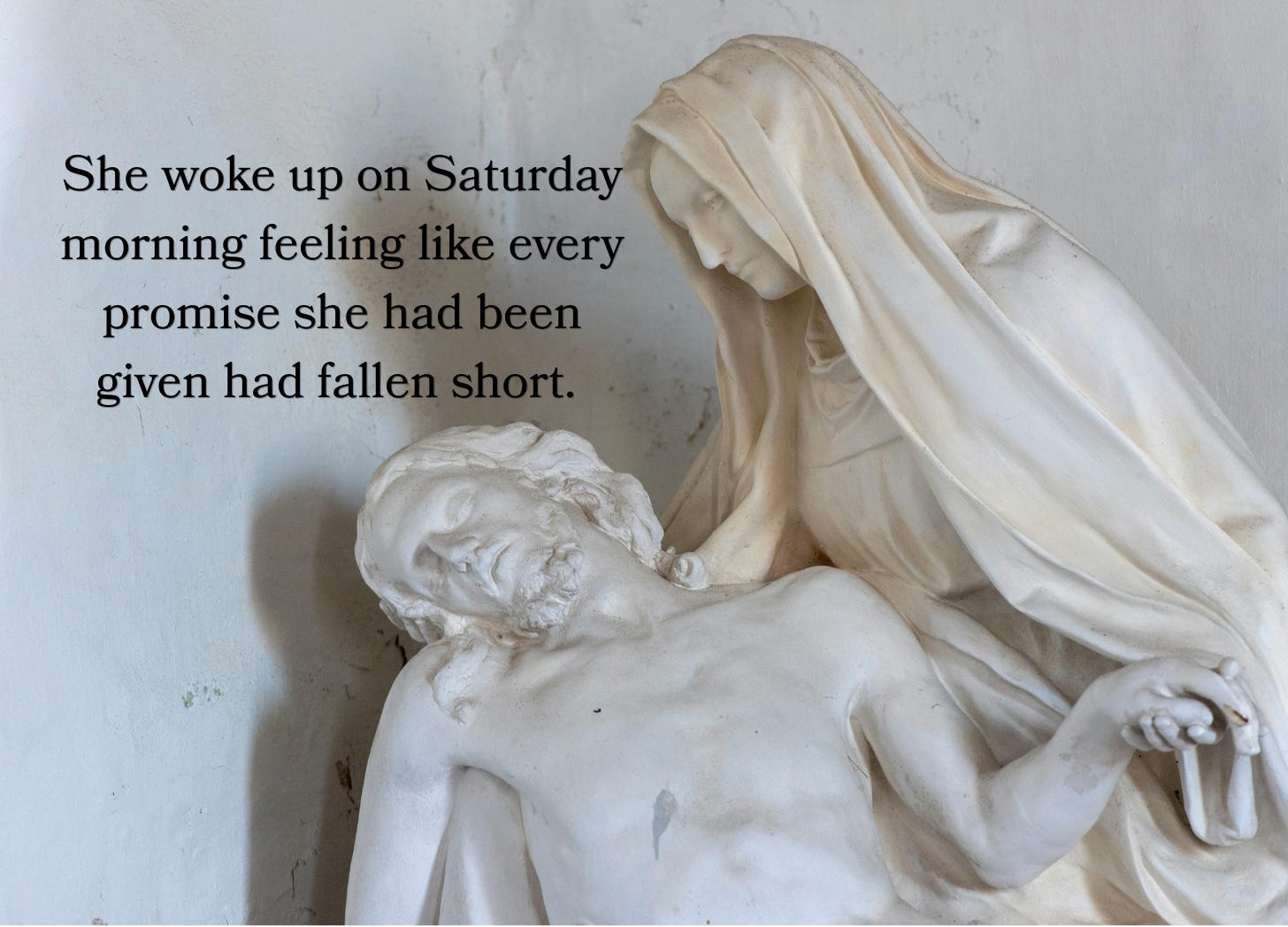
I think about Mary. She was told her son would be the Messiah. Instead she watched Him be beaten almost to death and then hung on a cross while He was mocked and struggled for every breath He took. She woke up on Saturday morning feeling like every promise she had been given had fallen short.
I think about the disciples. They knew He was their Messiah. Their Son of God. They thought He would become of the King of Israel. Instead they were scattered, hiding, and afraid. Their leader was dead. And the pharisees were most likely coming for them next. Everything they had hoped and planned for, built up in their minds as the new kingdom, was completely gone.
Now, modern science has shown us that grief activates the threat centers in our brains, particularly the parts that signal dangers and process physical pain. And the one part we need for hope, the prefontal cortex, is surpressed by it. So it’s not because of a lack of faith that we can’t access the hope of Easter - it’s because our brains are doing exactly what they were made to do when we’re facing deep grief, loss, and a sense of betrayal.
I want to trust. I have hope. But on Easter Sunday, the things I need to access those feelings - coregulation, witness, and a sense of safety, aren’t being met by the church. It’s being met with a joyfullness that seems to completely ignore the suffering some people sitting in their pews are going through. The church staff knows that this is one of two days a year where the many will come to church out of tradition or obligation and feel an urgency to share the Gospel with them.
It’s not wrong. But I’m sure, for many like me who can’t access those pathways in their brains because of what they’ve been through, it’s met with rolled eyes and a sense of fulfilling a tradition but not much else.
So, every Easter for the last nine years, I’m met at the intersection of all three of these things - the part that trusts and hopes, the part that logically knows the Gospel message and God’s character, and the part that feels so betrayed for having to wait for so long.
The part that wants to get past Easter as quickly as possible so images of an empty tomb can be taken down and I don’t have to be reminded that my sons still inhabit theirs.
If Easter feels this way for you too, please know you are not alone. Holidays are hard enough after loss but one that celebrates someone coming back to life - oof, talk about a gut punch.
But here is what the resurrection is not - it’s not a call to stop grieving. It’s not a glossing over of everything bad that happened. Jesus still bears His scars even though He didn’t have to. But He does to show us that He has been wounded and knows how to walk with us in it.
The resurrection instead is our promise. It was the downpayment that gives us the hope of knowing all has been paid and we will see those we love so deeply again in heaven. It lets us know that they are held in those same scarred hands, free of pain and trials, waiting for us to come join them.
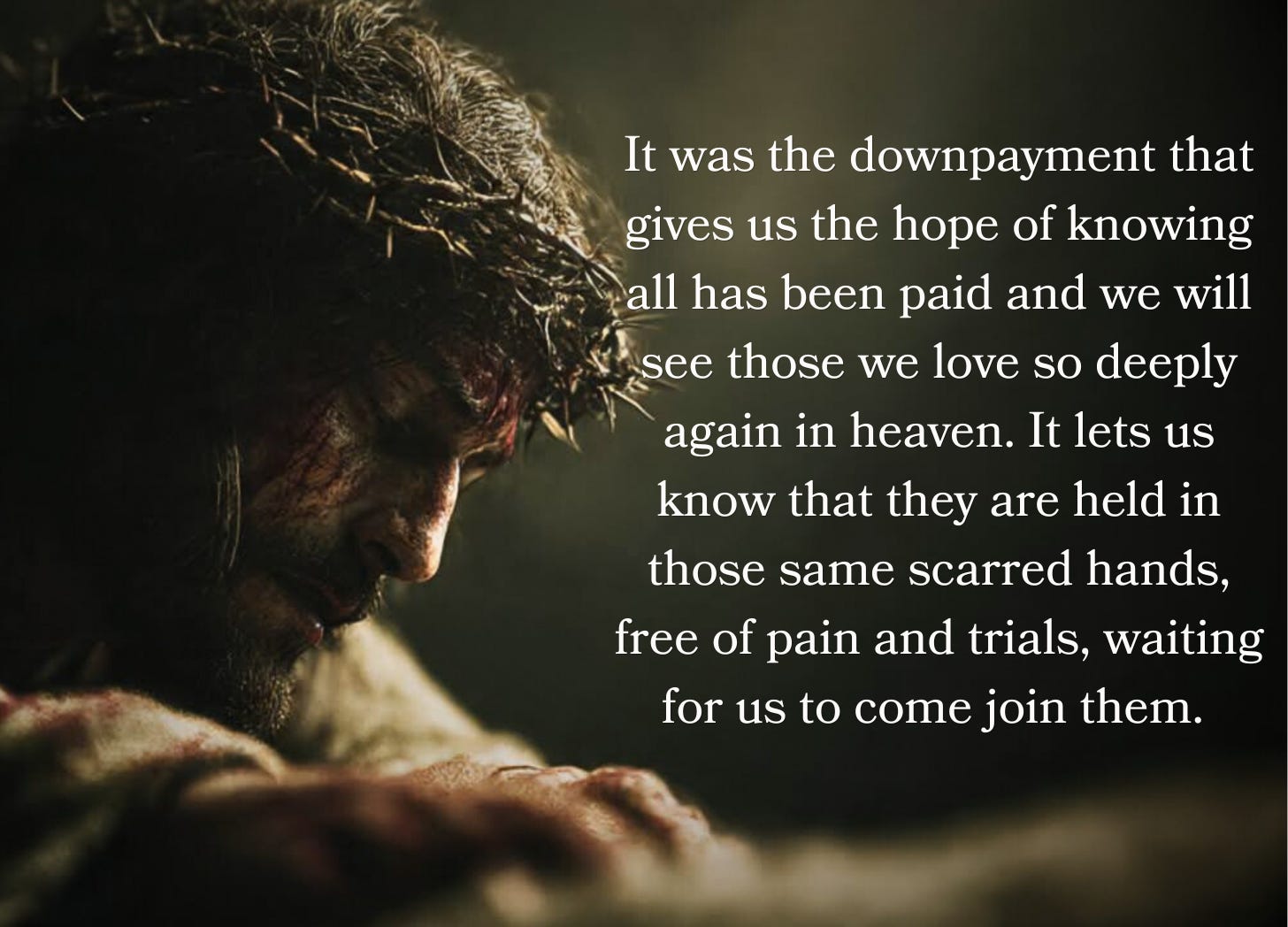
It is our promise that even though we walk through the valley of the shadow of death, we don’t walk alone. He walks alongside us in the darkness and the mess, never intimidated and never leaving us.
God didn’t have to include Saturday - the in-between day. But maybe He did to remind us that as we sit in the now and not yet that He is still working in the waiting and silence and devastating grief.
The Bible is woven with untidy faiths that call God out and ask why He’s left them alone and allowed them to suffer. And ours doesn’t have to be tidy either, in spite of the need to dress up with perfectly coifed hair and perfect outfits on Easter Sunday.
We can show up with broken faith, whether we honor this day in church or at home in the quietness of our hearts. Whether your church honors your grief on this day or not, I want you to know - you don’t have to show up perfectly. You can, truly, come exactly as you are.
If you’d like someplace to go in your Bible for further reading this Easter weekend in a way that it feels like understanding and not just another Gospel message, I’ve compiled this list below for you. May this Easter be gentle on your heart and remind you that you are not alone in your sufferings and you have hope in His resurrection.
Psalm 4
Psalm 22 (spoken by Jesus from the cross)
Psalm 31
Psalm 42
Psalm 88 - a lament with no resolution
Psalm 126
Psalm 142
Lamentations 1:12
Romans 8:18-28
1 Corinthians 15:12-17
I just don't celebrate with others. It seems artificial and is unfulfilling in so many ways. I quietly remember and find solace in scripture I read to myself or aloud to my husband. Thank you for your list of suggested readings. Time changes the emptiness and pain but it does NOT make everything beautiful again. Even when I see beauty, it's just not the same as it once was. I'm not mad at God, and know He promises I will see my loved one again, but...
https://substack.com/@oncedivided/note/c-206999397?r=6ycyb8&utm_medium=ios&utm_source=notes-share-action